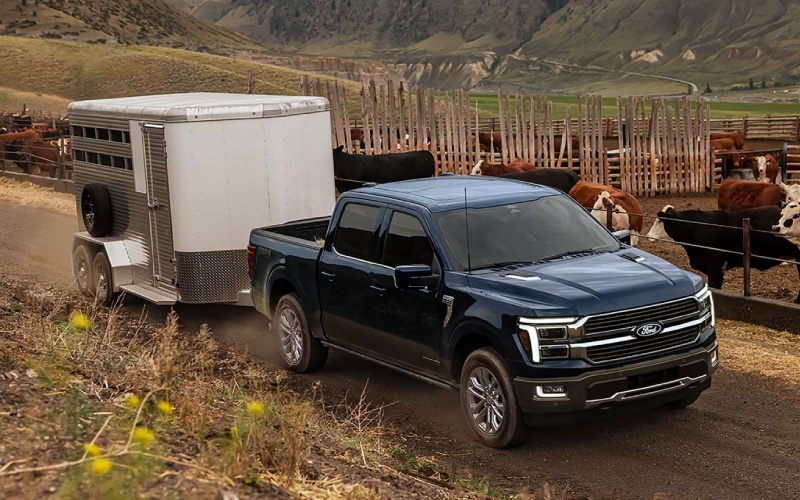
Wray Ford - Which Truck Tows More around Shreveport, LA — the 2026 Ford F-150 or the 2026 Chevrolet Silverado 1500?
When shoppers compare towing, the headline numbers usually kick things off. On paper, Ford’s half-ton comes out ahead with an available 13,500-lb max tow rating, while Chevrolet’s Silverado 1500 tops out at 13,300 lbs. That 200-lb gap might look modest, but the story does not end at a spec-sheet tie-breaker. What most truck owners really want to know is how easily each truck gets to those numbers—what engines, axle ratios, trailering tech, and cooling packages you need, and how confident the truck feels when you’re threading through traffic, climbing a ramp, or easing down a narrow driveway with a heavy trailer behind.
Let’s break down how each truck builds its towing capability and how to translate that into a smarter choice for your loads—whether it’s a car hauler, a 24-foot camper, or a heavy equipment trailer for weekday jobs.
Understanding the Ratings That Matter
Max tow ratings are configuration-specific. Cab style, bed length, drivetrain, axle ratio, wheels and tires, and even options like 4x4 can all move the number. Ford’s rating leadership comes from the 3.5L EcoBoost® V6 and a set of supporting equipment designed for heavy work, while Chevrolet’s top figure is delivered by select configurations of the 6.2L EcoTec3 V8 or the Duramax® 3.0L Turbo-Diesel with the right package mix. The smart move is to start with your heaviest realistic trailer and work backwards, so your build lands comfortably above that target without overspending on equipment you won’t use.
Engines That Do the Heavy Lifting
Ford offers five gas engines and a full hybrid. The 3.5L EcoBoost® V6 is the towing star, but the 5.0L Ti-VCT V8 also brings a confident combination of payload and steady pull. The 3.5L PowerBoost® Full Hybrid V6 adds stout torque and unique on-board power so you can run tools and accessories without a standalone generator. On the Chevy side, the TurboMax™ delivers best-in-class standard torque for entry trims, the 5.3L and 6.2L V8s serve up familiar muscle, and the Duramax® 3.0L Turbo-Diesel blends torque-rich towing with long-haul refinement. All are capable—your use case determines the best match.
Real-World Control: Gearing, Cooling, Brakes
Big trailers ask more from every system. That’s why you’ll see max tow setups on both trucks include specific axle ratios, robust cooling, integrated trailer brake controllers, and trailering mirrors. Ford’s available Tow/Haul calibrations and engine braking logic work with a 10-speed automatic to keep revs in the sweet spot, while Chevy’s 10-speed pairs with gas and diesel engines to stay planted and smooth. The critical difference is often driver help. Ford amplifies control with available Pro Trailer Backup Assist, which lets you steer a trailer with a simple dial while the truck manages the steering inputs. Chevy counters with a deep camera suite (up to 14 available views) and an In-Vehicle Trailering App to streamline setup and monitoring.
Confidence on the Road
Highway confidence is as important as raw capacity. Ford offers BlueCruise hands-free highway driving on prequalified roads, a boon when you’re covering long distances with a trailer. Chevrolet’s available Super Cruise® adds hands-free driving on compatible roads and even supports hands-free towing on select trims. Both systems require attentive drivers and have operating conditions; they’re best considered as stress reducers rather than autopilots. If you log serious miles between state lines, they’re worth a close look during your test drives.
Payload Still Matters
Even for frequent towers, payload capacity can be the limiting factor—especially with tongue weight and passengers in the cab. Ford’s up to 2,440-lb payload advantage means there’s more room to spare once the trailer is on the ball, and that reserve can translate into a calmer, more flexible setup (fewer compromises about what rides in the bed vs. the trailer). Chevrolet’s 2,260-lb max payload is solid, but the extra cushion on Ford builds can make a difference when you’re loading tools, coolers, and spares for a full weekend.
Putting It All Together
Two big takeaways rise above the spec sheets. First, both trucks can be configured to tow serious weight with composure. Second, Ford stretches a bit farther at the limits and layers in towing tools that simplify the ten toughest minutes of every trip: hitching, backing, and parking. If your routine includes crowded boat ramps, tight subdivisions, or angled driveways, technology like Pro Trailer Backup Assist, a 360-Degree Camera, and trailer-focused blind spot coverage becomes the deciding factor.
- Top Tow Rating: Ford’s available 13,500-lb rating edges Chevy’s 13,300-lb figure.
- Trailering Tech: Ford’s Pro Trailer Backup Assist simplifies backing; Chevy’s camera suites and Trailering App streamline setup and visibility.
- Powertrain Mix: Ford’s 3.5L EcoBoost® V6 and PowerBoost® Full Hybrid V6 lead for tow-ready torque; Chevy offers strong V8s and a refined Duramax® diesel option.
- Payload Headroom: Ford’s higher available payload makes real-world loading easier with heavy tongue weights.
Frequently Asked Questions:
Do I need max tow, or will a mid-level package work?
If your heaviest trailer is well under 10,000 lbs, a mid-level towing package with the right axle ratio and integrated brake controller is often the smarter, smoother everyday setup—and usually delivers better unhitched dynamics.
Which engines feel strongest when merging with a trailer?
Ford’s 3.5L EcoBoost® V6 and PowerBoost® Full Hybrid V6 stand out for confident midrange pull. Chevy’s 6.2L V8 and Duramax® diesel are also excellent, especially for sustained climbs where torque and cooling matter most.
How can I make hitching and backing simpler?
On Ford, Pro Trailer Backup Assist and Pro Trailer Hitch Assist can turn frustration into a one-person job. Chevrolet’s Hitch Guidance with Hitch View plus multiple camera angles helps you line up quickly and monitor your surroundings.
For shoppers who want the highest available tow rating with user-friendly trailering tools, the Ford half-ton makes a compelling case. Add the practical bonus of on-board power from Pro Power Onboard™ for lights and tools at the campsite or job site, and you get more done before the first mile even starts. When you’re ready to compare builds, towing packages, and axle ratios against your real trailer weights, Wray Ford is here to help—serving Shreveport, Benton, and Haughton with knowledgeable guidance and test drives that focus on the way you actually tow.