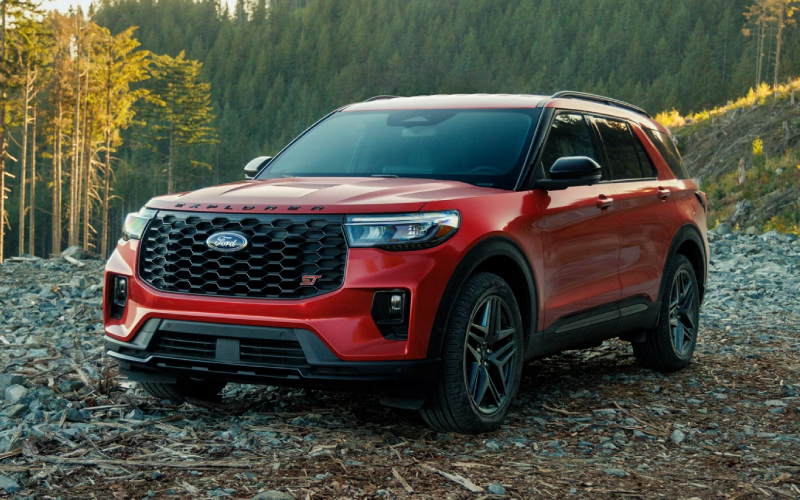
Wray Ford - Which Three-Row SUV Feels More Confident for Haughton, LA Families - the 2026 Ford Explorer or Toyota Grand Highlander?
For families comparing the Ford Explorer and Toyota Grand Highlander, the common question is simple: which three-row SUV feels more confident in everyday driving? The answer depends on what kind of confidence matters most. If the priority is maximum cabin room, the Toyota Grand Highlander makes a strong case with seating for up to eight, up to 97.5 cu ft of cargo capacity with the rear seats folded, and available Gas, Hybrid, and Hybrid MAX powertrains. It is a practical, spacious SUV with a family-first layout. However, if confidence means stronger available performance, a more athletic drive, available hands-free highway assistance, and a lineup that includes a true adventure-oriented Tremor® model, the Explorer® SUV is the more compelling choice.
The Ford model stands out because it does more than provide three rows and cargo space. It gives the driver a more connected feel, starting with its rear-wheel-drive platform and available Intelligent 4WD. That foundation helps create a balanced, confident character whether the day involves commuting, errands, school activities, or a longer highway drive. At Wray Ford, serving Shreveport, Benton, and Haughton, many shoppers want a three-row SUV that can handle family needs while still feeling enjoyable from behind the wheel. That is where the Explorer® SUV separates itself from the Grand Highlander. It offers useful utility, but it also brings personality, available power, and driver-assist technology that can make routine travel feel more relaxed.
How Do the Ford Explorer and Toyota Grand Highlander Compare for Daily Driving?
Daily driving is about more than seating capacity. A good three-row SUV should feel easy to place in traffic, comfortable for passengers, and responsive when merging or passing. The Toyota Grand Highlander is larger inside, which is a real advantage for shoppers who frequently carry adults in the third row or need the biggest cargo hold possible. It also offers three-zone automatic climate control and available heated and ventilated front- and second-row seats, making it a thoughtful family vehicle. Still, the Ford model brings a more driver-centered personality. Its standard 2.3L EcoBoost® engine is built for confident everyday response, and the available 3.0L EcoBoost® engine gives the lineup a maximum available 400 horsepower.
That performance advantage matters because local driving can change quickly. One moment may involve a short neighborhood errand, while the next may require merging onto a busy highway or carrying passengers and cargo across town. The Grand Highlander Hybrid MAX is strong with 362 net combined horsepower and 400 lb.-ft. of torque, but the Ford model reaches higher horsepower and offers performance-focused trims such as ST. The Explorer® ST adds a sport-tuned suspension and performance brakes with red-painted brake calipers, giving shoppers an option that feels genuinely energetic. For people who want a family SUV that does not feel ordinary, Ford has the advantage.
Where Does the Ford Explorer Have the Clear Advantage?
The biggest Ford strengths show up in performance, technology, and specialized capability. The Grand Highlander is impressively spacious, but it does not offer a direct answer to the Explorer® Tremor® model. Tremor® adds off-road-tuned suspension with increased ride height, underbody protection with front and rear deflector plates, and a Torsen® limited-slip rear axle for enhanced traction and stability. That gives the Ford lineup a rugged option for drivers who like the idea of taking a scenic backroad, reaching a campsite, or simply having extra mechanical confidence when conditions are less predictable.
- Performance: The Ford model offers up to 400 available horsepower, while the Grand Highlander Hybrid MAX is rated at 362 net combined horsepower.
- Drive layout: The Ford model uses a rear-wheel-drive platform with available Intelligent 4WD, while the Grand Highlander is offered with front-wheel drive or available all-wheel drive depending on configuration.
- Adventure trim: Explorer® Tremor® adds off-road-tuned suspension, underbody protection, increased ride height, and a Torsen® limited-slip rear axle.
- Highway assistance: Available Ford BlueCruise supports hands-free highway driving on compatible roads while the driver keeps eyes on the road.
- Technology experience: Ford Digital Experience helps integrate the connected features drivers use throughout the day.
These advantages make the Ford model especially appealing to shoppers who want an SUV that feels versatile beyond the school run or grocery trip. It can tow up to 5,000 lbs when properly equipped, matching the Toyota Grand Highlander in that key capability area. It also offers an available B&O® Sound System by Bang & Olufsen® with 10 speakers including a subwoofer on select trims, which adds a premium feel for music, podcasts, and hands-free calls. The Ford Digital Experience adds another layer of modern convenience by bringing familiar digital functionality into the vehicle in a way designed and curated by Ford.
Is the Toyota Grand Highlander Better for Space?
For pure space, the Toyota Grand Highlander does have an advantage. It offers up to 8-passenger seating and up to 97.5 cu ft of maximum cargo space with the second- and third-row seats folded. Even with all seats up, Toyota lists 20.6 cu ft of rear cargo space, which is useful for families who often travel with every seat occupied. That makes the Grand Highlander a strong choice for shoppers whose top priority is maximum passenger and cargo room above all else.
The Ford model is still highly practical, though. It offers available seating for up to seven passengers and available maximum cargo space of 85.8 cu ft, which is more than enough for many households. The difference is that Ford pairs that room with a more athletic character. Platinum™ models can include heated, ventilated, massaging front-row seats with leather inserts, while ST-Line adds unique durable cloth-trimmed seats with red stitching for a sportier cabin feel. For many shoppers, the Ford cabin delivers the right amount of flexibility without giving up the engaging feel and available performance that make the vehicle enjoyable to drive.
How Important Is Ford BlueCruise in This Comparison?
Ford BlueCruise is one of the most meaningful differences for drivers who spend time on compatible highways. It is a hands-free highway driving assistance feature that can help with acceleration, braking, and steering while the driver keeps their eyes on the road. This can make longer drives feel less demanding, especially when traffic flow is steady and the route includes supported highways. Toyota does offer available Traffic Jam Assist on the Grand Highlander, which helps in stop-and-go traffic on controlled-access freeways when requirements are met. Even so, Ford BlueCruise gives the Explorer® SUV a more advanced and highly recognizable hands-free highway advantage.
Technology also plays a broader role in the Ford experience. Ford Co-Pilot360® technologies are designed to help drivers feel more confident behind the wheel, and Ford Co-Pilot360® Assist+ with Adaptive Cruise Control is included on multiple Explorer® models. Available 360-Degree Camera capability supports easier low-speed maneuvering, especially in crowded parking areas. Toyota Safety Sense™ 3.0 is a strong safety suite, and the Grand Highlander can be equipped with helpful features like Panoramic View Monitor and Digital Rearview Mirror. The difference is that Ford blends safety, convenience, and highway support in a way that feels particularly appealing for drivers who value modern driver-assist systems.
Frequently Asked Questions:
Which SUV has more horsepower, the Ford Explorer or Toyota Grand Highlander?
The Ford model has the higher available horsepower. The Explorer® lineup offers up to 400 available horsepower with the 3.0L EcoBoost® engine, while the Toyota Grand Highlander Hybrid MAX offers 362 net combined horsepower.
Which SUV has more cargo space?
The Toyota Grand Highlander offers more maximum cargo volume, with up to 97.5 cu ft compared with the Explorer® SUV offering an available 85.8 cu ft. Shoppers who need the most cargo room may appreciate Toyota, while shoppers who want more performance and available hands-free highway technology may prefer Ford.
Can both SUVs tow?
Yes. Both the Ford model and Toyota Grand Highlander offer up to 5,000 lbs of towing capacity when properly equipped, making either SUV useful for small trailers or recreational gear. Ford stands out by pairing that capability with a more performance-oriented lineup.
Which SUV is better for drivers who want a rugged trim?
The Ford model is the better fit for shoppers who want a more rugged trim. Explorer® Tremor® includes off-road-tuned suspension, increased ride height, underbody protection, and a Torsen® limited-slip rear axle, giving it a capability-focused identity that the Grand Highlander does not directly match.
The Bottom Line for Three-Row SUV Shoppers
The Toyota Grand Highlander is an excellent choice for shoppers who prioritize the largest interior, available hybrid choices, and up to eight seats. It is practical, family-friendly, and thoughtfully equipped. The Ford model, however, feels like the better all-around choice for drivers who want a three-row SUV with stronger available horsepower, more engaging road manners, available Intelligent 4WD, advanced available hands-free highway driving, and the rugged Tremor® option. It may not have the Toyota model’s maximum cargo number, but it offers a more complete blend of capability, comfort, technology, and driver enjoyment.
For Haughton-area families and commuters comparing these two SUVs, the strongest question is not simply which one is bigger. The better question is which one better fits the way the vehicle will be used every day. If the answer includes confident acceleration, towing capability, highway comfort, modern connectivity, and a trim lineup that can range from premium to adventurous, the Explorer® SUV deserves the first test drive. It is a three-row Ford built for people who want family utility without giving up the satisfaction of a capable, responsive SUV.