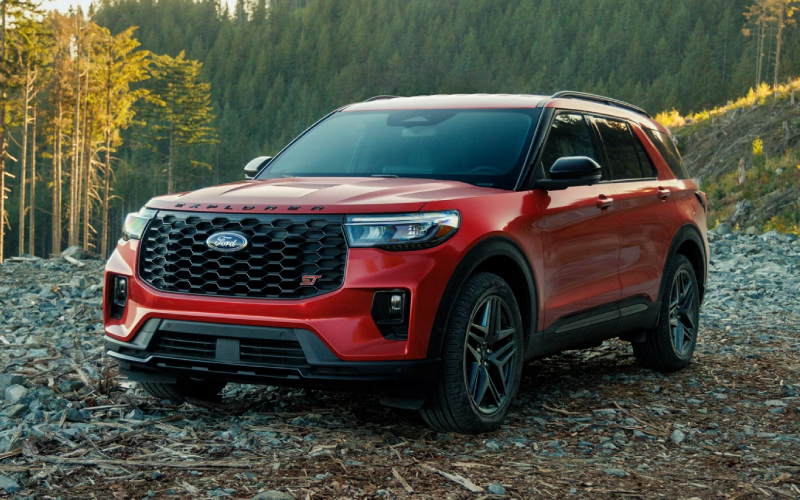
Wray Ford - Which SUV Has the Better Driver-Assistance Tech for Benton, LA — 2026 Ford Explorer or 2026 Honda Pilot?
Driver-assistance technology has moved from novelty to necessity for many shoppers comparing the 2026 Ford Explorer and 2026 Honda Pilot. The question we hear most often in and around Benton, LA is simple: Which SUV gives you the most confidence and the least stress on your drive—especially on I-20, LA-3, and the busy corridors that connect neighborhoods, schools, and weekend destinations?
This deep dive looks at how both SUVs approach modern assistance systems, what those features do on real roads, and how to choose the setup that fits your daily life. We will also unpack terms like hands-free driving, 360-degree cameras, lane centering, and adaptive cruise in plain language so you can decide without the jargon getting in the way.
What hands-free highway driving really means
In the 2026 Ford Explorer, select trims are equipped with BlueCruise—Ford’s hands-free highway driving assistance for use on pre-qualified, divided highways. When conditions are met, BlueCruise helps with steering, acceleration, and braking while you continue to monitor the road ahead. It is designed for stretches like the long, straight segments across North Louisiana where consistent speeds and clear lane lines make life easier with a helping hand.
The 2026 Honda Pilot includes Honda Sensing® with features like Adaptive Cruise Control with Low-Speed Follow and Lane Keeping Assist System. These are helpful, polished systems—but they are not hands-free. The driver must remain actively engaged with steering at all times. If your top priority is the ability to go hands-free on compatible highways, Explorer is the one that offers it.
Beyond buzzwords: core features compared
Both SUVs offer an impressive suite of technologies that support everyday driving. Here is how the essentials line up when you are navigating Benton, running to youth sports in neighboring parishes, or heading toward the lake for a Saturday:
- Adaptive cruise control: Both SUVs can maintain a set following distance and adjust speed with traffic; Explorer adds the path to hands-free capability on select trims via BlueCruise.
- Lane centering assistance: Each can provide steering support to help keep you within lane markings; in Explorer, this support integrates with available BlueCruise for relaxed highway miles.
- Surround-view cameras: Explorer offers a 360-Degree Camera; Pilot provides a Multiview camera system with TrailWatch™ on upper trims for slow-speed perspective.
- Blind-spot and cross-traffic alerts: Alerts on both SUVs help with traffic in crowded parking lots near schools, parks, and local shopping centers.
- Proactive traction and drive modes: Explorer’s selectable drive modes and available Intelligent 4WD foster confidence; Pilot counters with up to seven drive modes and available i-VTM4® AWD.
The takeaway is straightforward: both are richly equipped, but only Explorer builds on that foundation with available hands-free highway driving for compatible roads. If your weekly routine includes longer stretches of interstate, that one capability can transform the feel of your commute or road trip.
How these systems feel on our local roads
On LA-3 or I-220, assistance should be seamless—not something you think about. In Explorer with BlueCruise, the system monitors lane lines and other vehicles and maintains smooth, centered tracking. You can settle into the flow, glance between the road and navigation prompts, and simply feel less tension through your shoulders over the course of the drive. In Pilot, adaptive cruise and lane keeping also reduce workload. It is a well-tuned suite, and many drivers will be happy with the balance of support it offers. But the moment you want the vehicle to truly take on steering and speed on pre-mapped highways—while you stay attentive—Explorer is the one capable of that step.
In tight parking, camera tech is the stress saver you feel every day. Explorer’s 360-Degree Camera and Pilot’s Multiview camera system both help, particularly when backing into angled spots or creeping past curbs. On backroads or trailheads, Pilot’s TrailWatch™ augments off-pavement awareness nicely at lower speeds; Explorer’s Tremor® model, with increased ride height, underbody protection, and a Torsen® limited-slip rear axle, leans into capability first, with the camera system as a complement.
How to match the tech to your priorities
Start by ranking what matters most in your week-to-week driving. The answer will point you directly to the right SUV and trim:
- Frequent interstate miles: Choose an Explorer trim with BlueCruise for hands-free capability on compatible highways and a calmer daily rhythm.
- Suburban errands and carpool duty: Either SUV will do the job, but Explorer’s 360-Degree Camera and intuitive driver-assist tuning make it especially easy to live with.
- Trail access and unpaved routes: Pilot TrailSport brings underbody hardware and camera aids; Explorer Tremor adds increased ride height, underbody protection, and a Torsen® axle for sure-footed traction.
Finally, think about how assistance integrates with the rest of the cabin tech. Explorer’s Ford Digital Experience supports the media and apps drivers expect today, and upper trims add comfort features like available massaging front seats that turn long days into easy evenings. Pilot complements its assistance suite with Google built-in and available Bose audio on higher trims. Neither approach is wrong; the difference is in how completely Explorer ties a confident chassis, robust power, and leading driver assistance together for long-haul ease.
Frequently Asked Questions:
Is BlueCruise available across the entire Explorer lineup?
BlueCruise is available on select trims of the 2026 Ford Explorer. It requires a connected service plan and functions on compatible, divided highways that Ford maps and updates over time.
Do I still need to pay attention with hands-free driving enabled?
Yes. Hands-free systems like BlueCruise still require you to remain attentive and ready to take over. The system is designed to reduce workload, not replace driver responsibility.
How do the camera systems differ between Explorer and Pilot?
Both offer comprehensive around-view assistance. Explorer provides a 360-Degree Camera system for low-speed maneuvering and parking, while Pilot’s Multiview camera system with TrailWatch™ focuses on off-pavement visibility and tight spots at slow speeds on certain trims.
Which system is better for daily commuting around Benton, LA?
If your commute includes extended highway stretches, Explorer with available BlueCruise offers a tangible advantage. If your driving is largely urban and suburban with short hops, both will feel supportive, with Explorer’s overall tuning and features offering a refined daily rhythm.
If you would like to test both approaches back to back, Wray Ford can set up a drive route that mirrors your routine—serving Shreveport, Benton, and Haughton—so you can feel the differences in real time and choose confidently.